 Karel de Grote Hogeschool

An interview with Kris Peeters by Jon Wickins
☰ 5 min read
“You must be able to think for yourself. You are responsible for the future.”
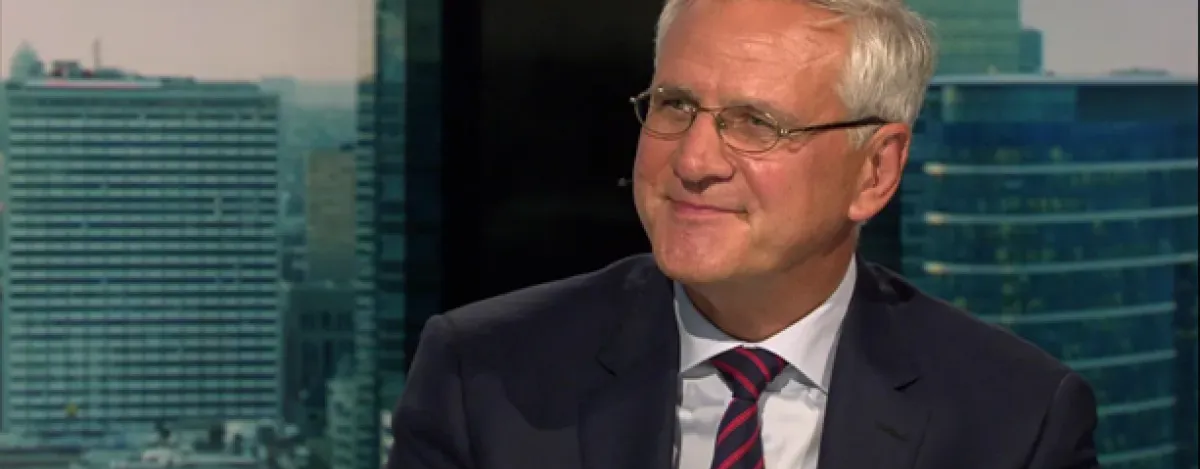
Kris Peeters has held some of the most influential roles in Belgian and European politics, from Minister-President of Flanders to Deputy Prime Minister of Belgium and Member of the European Parliament. Following his political career, he worked as Vice-President of the European Investment Bank.
He later became a senior advisor to Japanese and Singaporean groups. Kris also teaches International Business & Politics at KdG and remains a student himself, currently in his final year studying for a Master’s degree in Philosophy at the University of Antwerp.
I spoke to him about his inspiration for teaching in an international classroom, what today’s graduates should be preparing for, and the lasting value of international education.
Amor Mundi - love of the world
There is one message that Kris Peeters always passes on to his students: Amor Mundi, taken from the writings of Hannah Arendt. The idea is to love the world enough to stay actively engaged in the political and social realities we share, despite the many challenges. It is based not on sentimentalism, but on a firm commitment to care and to take action.
“I try to convince people of the value in this even when, as some of our students do, they come from regions affected by severe social upheaval.”
Bringing experience into the classroom
The main motivation for Kris to teach is to give something back to young people and to contribute positively to the community.
“I do feel that my real experience counts and that my first-hand knowledge about certain issues matters. Students can look up lots of information about the World Trade Organization without me explaining it.”
“If I can tell personal stories, for example about having been to the WTO headquarters, then this brings the topic to life and is more engaging for the students.”
“I feel that recounting my experiences is important. I hope they will remember some of these stories. Students are there to reach a goal - to get a degree - but education should have deeper roots, and I aim to leave them with something meaningful that they will remember in the future.
If students remember something from one of my lessons five years later, then my mission is complete.”
Kris says he has already received encouraging feedback from students who had never previously felt inspired by politics but who now understand it better and feel motivated to engage politically in their home countries.
“They have also told me how they better understand international institutions, like the European Investment Bank and the United Nations, and see how important they can be.”
Preparing students for today’s challenges
“There are three main issues that I believe our students and graduates face: geopolitical tension, the evolution of technology, and the transition towards greater environmental awareness, including initiatives such as the Green Deal.
During their education, our students have the opportunity to prepare for all of these.”
Kris describes his classroom as a place for open debate about the geopolitical issues shaping the world today.
“I use my classroom as a place to debate issues that affect us all, such as the role of Europe or the recent actions of the United States. These conversations are very interesting because you can begin with familiar criticisms, for example bureaucracy within Europe, but when you go deeper into values and responsibilities, the conversation opens up.
Discussing these issues is important for all of us, especially for students who will encounter them throughout their careers.”
Why classrooms matter more than ever
“In a time when opinions are shared constantly through social media, in an incredibly fast-moving environment and often without the space for nuanced debate, I feel the classroom has more of a role to play than ever.
It should help young people from around the world process information, share their thoughts, and discuss these themes openly.”
Artificial intelligence and critical thinking
“We discuss the use of AI in my classes. I encourage my students to use it - of course they should use it - but I let them know that I will ask questions that AI alone will not answer well enough. They still need to prepare their answers with critical thinking.
I want to motivate students to think for themselves. I ask them what they think about current news and encourage them to have an opinion.”
For Kris, this returns once again to the principle of Amor Mundi.
“You must be able to think for yourself. You are responsible for the future. It’s not easy to be optimistic about the future right now, but it is important to be realistic and to develop a sense of responsibility.”
He also believes AI is changing the role of teachers and the expectations students place on the classroom experience.
“The question for teachers now is increasingly: how can you make your courses interesting enough that students genuinely want to attend?
My mission is to encourage dialogue with students. There needs to be added value in being present in the classroom.”
The importance of international students in Belgium
“I’m a great believer in the international approach. When Flemish students have the opportunity to study in an international classroom and meet people from around the world, that is something they will remember for the rest of their lives.
For international students, our location is also very interesting because we are at the centre of the European Union. We have a great deal to offer people coming from other countries, and I think we have an obligation to support and welcome them.”
For Kris, international education is ultimately about solidarity and mutual respect.
“Respect for each other is a value both for students and teachers, and it is something that lasts for a lifetime.”
The practical approach at KdG
Kris says he appreciates the pragmatic approach of a University of Applied Sciences.
“I think you get an interesting combination of intellectual ability and practicality from the students.
To assess them, I ask students to examine the economic and political situation of a country. They combine knowledge with critical thinking and apply their understanding to real situations.
I also ask questions about their papers, so they need to explain the challenges within a country and think about possible solutions. They place themselves in the position of a company CEO visiting that country on a mission, meeting relevant people and discussing significant issues.
That is applied international business and politics.”
Staying connected after graduation
Kris remains deeply interested in what students go on to do after graduation.
“It is always interesting to see how people take their skills forward. I think of it as an ‘after action review’.”
He believes one of the greatest strengths of international business schools is the network students build during their studies.
“I hope our graduates now have friends from all over the world.”
“It is important to keep that network active and to stay in touch with what others in the network are doing. A network can open up new opportunities.
I very much look forward to hearing about what our graduates are now doing and what my students go on to do after they graduate. I want to hear how they are making a difference.”
Stay connected with KdG
Explore more stories from alumni, lecturers and pioneers, and stay connected with the KdG alumni community.