 Karel de Grote Hogeschool

Exchange programme
- Explore the world of business and marketing – from brand strategy to consumer insights, develop skills that make an impact.
- Join this exchange programme for one semester or a full year, in autumn or spring.
- English-taught exchange programme in Europe, designed for international students.
- Learn from international lecturers and industry experts.
- Apply your knowledge in practical projects and real-life business cases.
- Combine theory with team assignments, case studies, and workshops.
- Study and connect with classmates from all over the world in Belgium.
What does this course contain?
Course in brief
The Marketing and Management exchange track gives you a solid foundation in business practice while developing specialist marketing skills.
- Explore key areas such as marketing strategy, brand management, consumer insights, and business development.
- Learn to apply your knowledge in practical projects, real-life cases, and team assignments.
- Develop an entrepreneurial mindset and intercultural sensitivity.
- Courses are taught by international lecturers and industry professionals.
- You will study alongside exchange students from across Europe and beyond, creating a truly international learning environment.
- By the end of the semester, you will enhance your marketing and management expertise, and gain valuable intercultural and teamwork skills to prepare you for an international career.
Course overview
- You can register for a minimum of 20 credits and a maximum of 33 credits per semester.
Electives
Social Media Communication
(
3 credits
)
At the completion of this course, students should be able to:
• Identify social media communication strategies, how they are used and by whom
• Analyze and recreate the various techniques of persuasion used on social media
• Recognize what the media makers want us to believe or do
• Evaluate social media messages based on their own experiences, skills, beliefs, and values
• Create and distribute their own social media communications on subjects involving business, the arts, and social or environmental causes
Managerial Psychology
(
3 credits
)
The course will focus on the role of the modern manager as a leader and a coach, and the psychological aspects of working with people. Focus will be on how people function as an individual (me), interdividual (you and me), and as a group (we). First part of the course consists of a brief introduction to psychology. Special attention will be given to Positive Psychology, which focuses on improving the mental functioning of human beings above that of normal mental health. Students will learn what makes the positive psychological traits of human beings. They will learn how the mind works, and the role of automatic thoughts. How the way people think influences the way they feel. Which specific thoughts lead to which specific feelings. How by changing the way you think, you can change the way you feel. The ten most common thinking errors.
Second part of the course will focus on the differences between different personality types. Students will receive an introduction to the most common personality type indicators, with the possibility to take one (MBTI), so students can get an insight in how their own personality works. How their personality typically develops during lifetime. What is their dominant mental function. What is their inferior function. What typical situations bring them stress, and how can they reduce it. What are the typical careers for the different types. Based on the different personality types, different subjects will be discussed. Speed reading personality types. Misunderstandings between types. What each type can learn from the others. How do the different types view leadership, teamwork, time management, meetings, problem solving,… Students will learn about the different roles people play in a team.
European Affairs
(
3 credits
)
The starting point of this course will be several key elements that have been instrumental in the development of a European identity as we know it today. From industrialisation, the formation of nation states and the tendency to internationalise and globalise certain aspects of politics and trade over the concept of supranationalism, the transfer of sovereignty, the creation of the internal market and the customs union to the creation of the EU where concepts such as freedom, democracy and respect for human rights are considered as commonplace in European democracies.
We will study each of those topics more thoroughly, from a historical and contemporary perspective, find similarities over different countries and look for equivalents worldwide, consult media channels, look at what challenges them nowadays, consider future projections ...
Pitch and Presentation Skills
(
3 credits
)
Delivering a memorable presentation requires you to be a psychologist, creative wonder, strategic salesperson and Hollywood star combined. No small task.
On top of this, public speaking ranks – next to flying, death and spiders - very high on the list of things we’re most afraid of.
Therefore, our approach in this course will be a bit different from other presentation trainings out there. It’s not one size fits all, we’ll build on your personal talents and work around the pitfalls.
We’ll explore ways to master all aspects of presenting so you can confidently take that floor and become the pitch Ninja you never thought you’d be!
Prompt & Play
(
3 credits
)
Prompt & Play teaches you the fundamentals of marketing and lets you explore AI by doing. One week you get clear guidance, the next you roll up your sleeves and get to work:
- Build your own chatbot
- Create videos with the help of AI
- Plan a content calendar for your favorite brand
- Launch your own WordPress website, with AI as your co-pilot
From sharp prompts to standout content, you’ll learn how to use AI with both creativity and critical thinking.
Marketing and Branding Strategies
(
3 credits
)
Branding has become one of the most important concepts in marketing. Branding includes corporate identity expressions like brand and product names, logos, design, packaging, look & feel,... Its application ranges from consumer goods and services to places, people and concepts. The branding phenomena reached its peak when companies got a green light to incorporate the brand’s intangible value in their balance sheet. In this module students will obtain a clear understanding of the relevance of brands in contemporary society and will learn how to set up a brand management strategy.
International Human Resources Management
(
3 credits
)
This course addresses the topic of Human Resource Management in an international setting. As the business world globalizes even more, we must be aware of the reasons, the benefits, and the challenges of having a global workforce. Even though HR processes are based on the same core concepts and frameworks regardless of their national or international reach, the specificity of managing individuals, teams, and organizations in an international environment is quite significant. After this course, students will understand what it means to recruit & select employees internationally, train & develop them, and create compensation packages across borders.
City Marketing
(
3 credits
)
City Marketing, also known as City Branding (or Place Making) is a practice whose objective is to build a city’s image, which in turn is the starting point for developing a city’s brand. It is the basis for raising a policy to pursue economic expansion and, at the same time, it serves as a conduit for city residents to identify with their own city, impacting in their daily life, economically, socially and culturally. In an scenario of a globalized world, where competition among cities is a commonplace, City Branding comes to the foreground as a complex cutting edge, all-pervasive discipline and well-organized governmental activity, which contributes to the economic and physical restructuring of localities, in order to succeed in such a competitive environment.
The analysis and design of cities’ image and/or identity, including its subjective dimension as a place of emotion and meaning; and the methodological considerations techniques, practices and postulates of City Marketing are some of the aspects tackled in this course. Some of the questions that are addressed include, what is: A place? A city? A brand? Identity versus image? The citizens’ role versus tourists’? Measurement and city brand equity? A city brand index and items to be considered? Or if brands can be city makers?, among other inquiries.
Consumer Insights
(
3 credits
)
In this course, you dive deep into marketing psychology to discover what truly drives people in a complex consumer society. The curriculum covers four essential pillars: you begin with human perception and attitude, followed by an in-depth analysis of the buying process, where motivation and personal values set the course. You will also explore how social and cultural influences steer choices and learn to reach diverse target groups through segmentation.
The highlight of this course is behavioral economics; you will unravel how the brain often decides irrationally and how cognitive biases reshape our reality. By understanding these mechanisms, you learn to create persuasive products and campaigns that truly resonate with tomorrow's consumer.
Storytelling as a Business Tool
(
3 credits
)
Storytelling, it’s all about communication, interaction and getting your idea across.
- The difference between information and ideas
- Key requirements
- Story versus factual representation
- Requirements to tell stories
- CAST model
- Finetuning
- Bringing it all together
If you want to communicate so that your ideas and messages stick, tell stories. Storytelling is not fluffy, it’s about adding narrative structures, narrative elements to your content, to your texts.
It’s about shaping the story of your organisation, through stories of the past, the future, the successes and the failures. Adding a human touch, and shaping the tone of voice of your brand, your organisation. It’s about communication without clutter, making yourself heard and remembered.
Digital Marketing Strategy & AI
(
3 credits
)
Digital Strategy & AI puts you in the role of a mini agency. Together with your team, you pick a brand and get to work straight away. At the same time, you take on a real client assigned by your lecturer. Plenty on your plate: you develop a full digital marketing strategy from start to finish.
Along the way, you discover how AI can speed you up and sharpen your thinking. From audience insights to content planning, you use AI as a tool, while staying firmly in control. When do you rely on AI? And when do you trust your own judgment?
In this course, you learn how to combine strategy and technology into work that actually drives impact.
Language course (optional)
Dutch Foreign Language for Beginners
(
3 credits
)
This course introduces you to Dutch, spoken in the Netherlands and Flanders. The aim is to reach A1 level of the CEFR:
- Understand and use everyday phrases.
- Introduce yourself and others.
- Interact in simple conversations when spoken to clearly and slowly.
German-speaking students often progress faster and may reach A2 level within one semester.
You will:
- Explore the culture of Antwerp and Belgium.
- Build grammar, vocabulary, listening and speaking skills.
- Choose between a practical, interactive approach or a more grammar-focused approach.
Electives
Global Synergy: Mastering Intercultural Teamwork and Communication
(
3 credits
)
In today's fast-evolving and deeply interconnected world, effective teamwork and communication across cultures are essential. As an international student, you have undoubtedly experienced this firsthand. This course equips you, as an international student, with the skills to develop intercultural communication competencies, navigate diverse work environments and bridge cultural differences. Through interactive activities, guest lectures and practical frameworks, you will enhance and refine your cross-cultural communication abilities and learn how to collaborate successfully. Mapping your own cultural identity through an exclusive online assessment tool will provide you with valuable new insights. Emphasis is placed on enjoying intercultural communication and leveraging cultural diversity as a strength. By the end of this course, you will be prepared to thrive in global teams and international work settings. A fantastic international project with a partner university and other enthusiastic international students, will be the icing on the cake. Global synergy at its best!
International Sales Management
(
3 credits
)
Money matters. Many companies have sales at the top of their priority list. Sales equals income and customers! But how do you build a long term relationship with them?
We will dive into the link between sales and marketing as well as having a closer look at sales automation and upgrade strategies.
On top of that we will deal with cultural differences and personalities.
To complete this training sales team management and negotiation skills will be discussed using BtoB cases including role plays.
Are you in?
E-Business
(
3 credits
)
The course is focusing on the way Imagineering contributes to the success of e-Business. Transformational next to transactional marketing brings all parties closely together and enables strong and intense personal reactions; people want to belong to and to be involved because they love to be involved.
Theory will be translated into real action when constructing in small teams an imagineering programme for a real life e-business company. This course will have an irreversible impact on your life as marketer and/or an e-business professional. We want to welcome you to the inspiring world and memorable experience of this course ‘imagineering for sustainable happiness’.
Trends in innovation
(
3 credits
)
- You learn and apply current models regarding trend spotting and innovation.
- You develop innovation ideas based on trends.
- You develop innovation ideas based on Consumer Insights, Personas, and the Customer Journey.
- You evaluate the innovation ideas and make an informed decision.
- You develop and test a prototype.
- You develop the Business Model Canvas and evaluate market opportunities.
Smart Sustainable Cities
(
3 credits
)
In the intensive course ‘Smart Sustainable Cities’ we will explore how cities can both adapt to climate change and contribute to its mitigation. This practical course will cover key theoretical concepts such as the Smart Sustainable City, Data Sources, and the Commons in the City, all illustrated with real-world examples and cases, particularly through the lens of urban residents. The course focuses on three core areas: Smart Urban Mobility, Sustainable Construction and Buildings, and Managing (Limited) Resources. Students will visit projects in Antwerp and participate in a Citizen Science experiment.
Fashion Marketing
(
3 credits
)
Are you fascinated by fashion, but looking to see beyond the fleeting trends on your timeline? In this course, we unravel the psychology behind our wardrobes. Why do we buy what we buy, and why do we wear what we wear? You will learn how fashion shapes our self-image and how brands strategically position themselves in a global market.
We explore Antwerp’s unique DNA as a world-renowned fashion capital, the role of e-commerce, the power of online trends, and the true cost of fast fashion. You will develop the essential skills to become a future fashion expert—a strategist who doesn't just follow trends but creates lasting value based on well researched consumer psychology insights.
Responsible Marketing
(
3 credits
)
Ever wonder how marketing has been used to shape norms and promote positive social change?
Never before have social challenges been more at the center of public debate. Learn how marketing can be applied outside the commercial marketplace to the solution of diverse social problems. Responsible Marketing is a process that applies commercial approaches, social principles, and future-proof initiatives to communicate and deliver value that benefits communities and the environment.
You will have the opportunity to discuss, analyze and evaluate a variety of responsible marketing strategies that can support social change. Inspired by real-world examples and highly interactive workshops, you will be challenged to design your own creative Responsible Marketing Campaign for a non-profit organization with a potential real-world implementation. In doing so, the course seeks to encourage well-informed understanding of emerging areas in the field of marketing.
Prompt & Play
(
3 credits
)
Prompt & Play teaches you the fundamentals of marketing and lets you explore AI by doing. One week you get clear guidance, the next you roll up your sleeves and get to work:
- Build your own chatbot
- Create videos with the help of AI
- Plan a content calendar for your favorite brand
- Launch your own WordPress website, with AI as your co-pilot
From sharp prompts to standout content, you’ll learn how to use AI with both creativity and critical thinking.
Trends in Marketing
(
3 credits
)
The digitalisation of our world and the perceived value for each generation, changed the way "marketing" can play a role in the business of tomorrow. Mr. Kotler's “4P” or “5/6C” model has been challenged by modern technologies and consumer's way-of-thinking (sustainability, local solutions on a global scale, personalization, ...). It's important to evolve as "future marketeer" using the frameworks of (modern) marketing theories in order to choose the right positioning for your brand/product/service. The course focusses on the latest trends in the different marketing theories and models. During each session, we will firstly elaborate the marketing topics in theory, which are then put into practice and discussed in smaller groups. If you want to know why SAVE is a much more "modern" and practical model than the classical "4P" from our beloved Mr. Kotler, then we expect you very soon in this course.
Project and Change Management
(
3 credits
)
This course equips you with the skills you need to work in introductory-level roles in project and change management. Project managers play a key role in leading, planning and implementing critical projects to help their organization succeed. You’ll discover foundational project management terminology, gain a deeper understanding of the value a project management for an organization and understand the need for change management to realize a project's full potential.
AI for Business
(
3 credits
)
This course is tailored to provide students with an essential understanding of how artificial intelligence (AI) is revolutionizing the business sector. It delves into the core aspects of AI, such as machine learning, natural language processing, and Large Language Models (LLMs), demonstrating their role in fostering innovation, optimizing operations, and securing a competitive edge. Upon completion, students will possess a thorough grasp of both the opportunities and challenges presented by AI, alongside strategies for its effective deployment within the global business landscape. Moreover, this course will enhance students' ability to discern the practicality of AI for specific business scenarios. It focuses on teaching students to evaluate how well AI initiatives align with a company’s strategic objectives, operational capabilities, and ethical guidelines. The program also includes essential training on collaboration with data scientists and AI experts. A series of hands-on activities and engaging workshops, students will develop the necessary skills to effectively bridge the divide between business demands and technical execution, equipping them to guide and participate in AI-driven projects throughout their careers.
Language course (optional)
Dutch Foreign Language for Beginners
(
3 credits
)
This course will help you to develop your skills in Dutch, the language spoken in the Netherlands and in Flanders. The learning objective is to reach level A1 of the CEFR for languages: understand and use familiar everyday basic phrases, introduce yourself and others, interact in a simple way provided the other person talks slowly and clearly and is prepared to help. However, students who are fluent in German tend to learn Dutch very fast and can reach an A2 level in one semester and will have the chance to do so. You’ll learn about the culture of Antwerp and Belgium, you’ll recognize grammatical structures (A1) and use them (A2), you’ll develop your vocabulary, listening and speaking skills and you can choose between a more interactive and fun approach or a more classical approach focusing on grammar and vocabulary.
Exams and re-sits
- Regular exams take place on campus in Antwerp.
- Resits are scheduled between 18 August and 3 September.
- Written resit exams are held on campus, oral resit exams and assignments can be done remotely.
When?
Autumn Semester 2026
- Welcoming Days: 16 (evening) – 17 – 18 September
- Course modules term 1: 21 September – 30 October
- Deadline changes: To be decided
- Half term holidays (1 week): 2 November – 6 November
- Examinations: 9 November – 13 November
- Course modules term 2: 16 November – 8 January (!)
- Farewell event: To be decided
- Seasonal holidays (2 weeks): 21 December – 3 January
- Examinations: 11 January – 29 January
- End of semester: 29 January
- Resit: 18 August – 3 September (written exams are held on campus, oral exams and assignments can be done remotely)
Spring Semester 2027
- Welcoming Days: 15 February (full day)
- Course modules term 3: 15 February – 26 March
- Deadline changes: To be decided
- Seasonal holidays (2 weeks): 29 March – 11 April
- Examinations: 12 – 16 April
- Course modules term 4: 19 April – 28 May
- Farewell event: To be decided
- Study week (no classes): 31 May – 6 June
- Examinations: 7 June – 25 June
- End of semester: 25 June
- Resit: 18 August – 3 September (written exams are held on campus, oral exams and assignments can be done remotely)
Welcoming days
- Autumn 2026: 16 (evening)-17-18 September 2026
- Spring 2027: 15 February 2027 (full day)
Joining the Welcoming days is mandatory and key to a successful exchange.
What to expect?
- We will introduce you to campus life, explain your daily routine and show you more of Antwerp.
- Get to know your way around all things KdG.
- Meet your classmates and potential new best friends.
- Start to feel at home and comfortable for your first KdG classes.
Detailed program will be shared via e-mail.


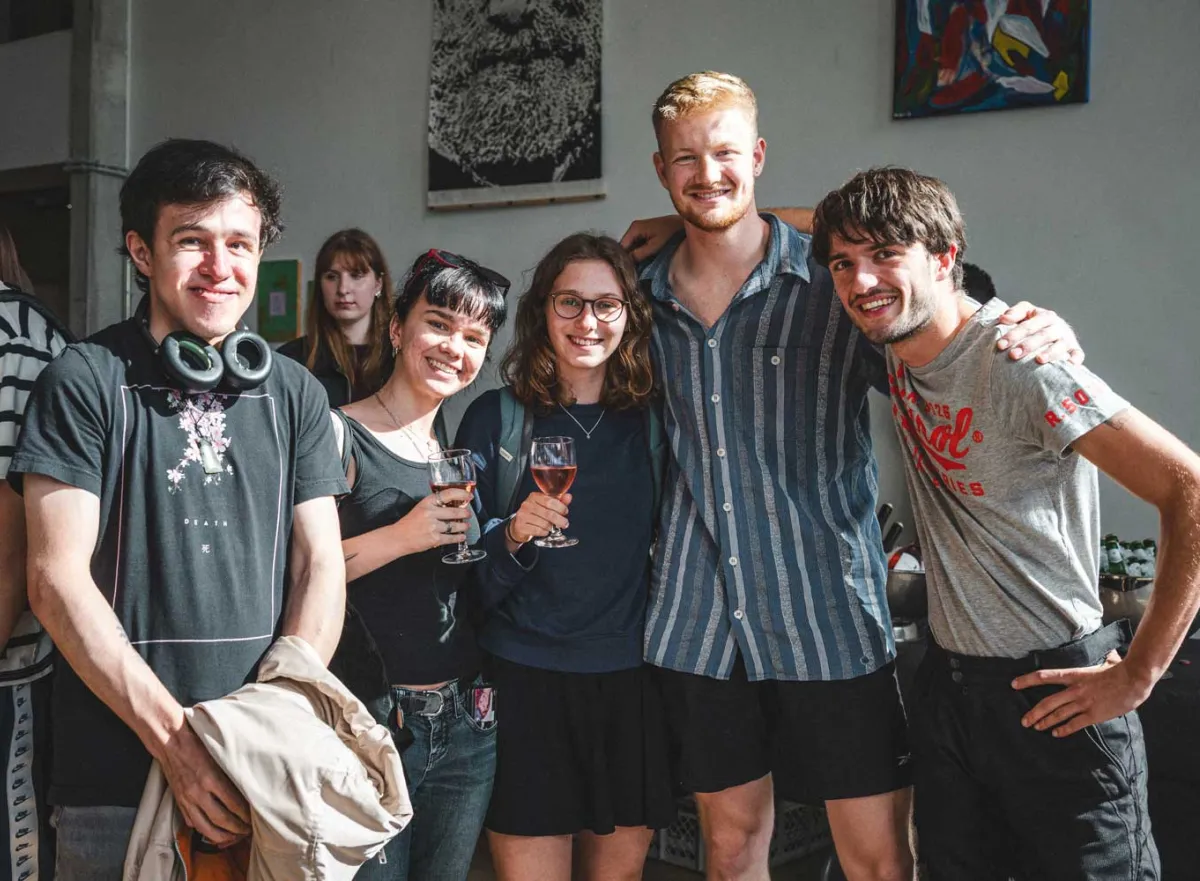
Study in Antwerp, Belgium
- Home to around 50,000 students and more than 170 nationalities.
- Antwerp is a safe, diverse and welcoming international student city.
- Situated on the River Scheldt, this mini metropolis is a gateway to the world.
- A perfectly located economic hub steeped in history, and always evolving.
- Brussels, Amsterdam, Paris and London all within easy reach.
Want to get a taste of student life at KdG? Follow us on Instagram!
Your main campus
- Your main campus is our Groenplaats campus in the heart of Antwerp, overlooking the the main square and cathedral, and near the Meir shopping street.
- You will occassionally have classes at one of our other campuses: Pothoek, or Zuid.
- Study in the library, get together for group work, or relax in the coffeebar in any of the KdG campuses.
- Excellent bus and tram links make getting around easy. Antwerpen-Centraal station is close by, connecting you to Brussels, Amsterdam, Paris, and London.
Campus Groenplaats
Nationalestraat 5
2000 ANTWERP
+32 3 613 16 00
info.mit@kdg.be
Practical information
Student onboarding (all the essential information you need)
Guidance and support
- You are not alone. KdG staff are here to support you with your studies.
- Students with special needs can apply for individual measures, which are set down in an 'Individual Learning Certificate' (ILC). The granting of these allows for certain concessions in your education and evaluation.
- Your mental wellbeing is important for us. More about guidance and support at KdG.
Apply
Who can apply?
- We welcome all incoming students in Business Administration and Commercial Sciences & Management warmly and look forward to having you join us.
- Some more specialised courses require preliminary knowledge or skills in International Business Management.
- Only students selected in the framework of an Interinstitutional Agreement can be accepted.
English language requirements
- English level B2 recommended for active participation in courses.
- Limited English proficiency may increase the risk of failing assignments and exams; responsibility of the sending institution.
- Optional language lessons available on your own expense at the language center of the University of Antwerp (Linguapolis). Applications and fees are to be arranged directly with Linguapolis.
How to apply?
- Ask your home institution to communicate your nomination to our international incoming coordinator via our nomination form. You can request the link via incoming.mit@kdg.be.
- When you are accepted, you will receive an e-mail confirming your nomination and a link to our online registration and course selection.
- When your courses have been approved by KdG, you will receive the link to Mobility Online where you can complete the rest of your application.
Deadlines
- 1st semester (Autumn semester):
- Nomination deadline: 1 May
- Application deadline: 30 June
- 2nd semester (Spring semester):
- Nomination deadline: 1 November
- Application deadline: 22 December